FINDING SELF WITH MEDIA

Julia reflects on how the global craze for Korean media has shaped her sense of self, and the complex realities of representation, stereotypes and what it means to be Korean Australian.
Has the media you consumed changed over time?
When comparing the media I consumed in high school to what I watch now, I can see a noticeable shift. Back then, shows like Gossip Girl were popular. Although I wasn’t deeply invested in them, I watched just enough to join conversations with my friends. Occasionally, I’d watch Korean variety shows or popular K-Dramas with my family. 2016, in particular, was the era of K-Dramas (iykyk), I binged countless series on piracy websites before Netflix really took off. At the time, I didn’t have many people at school who shared that interest, so it felt like a personal, almost guilty pleasure. Now, it’s completely different. Many of my friends actively watch Korean dramas, movies, and other media, and it’s so easily accessible. It still feels sometimes. There are even moments when others know more about recent shows or Korean slang than I do, which occasionally makes me question my own sense of “Korean-ness.”
When it comes to music, I have a vivid memory from primary school in 2012, when Psy’s Gangnam Style was everywhere. My classmates would request it at school discos and even memorise the lyrics. But instead of feeling that Korean culture was being recognised, I remember feeling slightly uncomfortable, it seemed like my classmates were treating it as a joke. The song itself is playful and humorous, but seeing people laugh at the lyrics made me wonder if they were laughing at my language. Despite that, Korean music has always been part of my life, and I listen to it even more now, especially with K-pop’s global rise. It’s fascinating to reflect on how quickly things have changed from a time when people barely knew where Korea was, to now, when so many are familiar with the language, culture, and media.
Has the global popularity of K-pop, K-dramas, or Korean culture changed the way you see your own identity or how others see you?
With the global popularity of Korean culture has come easier access, not just for me, but for everyone. It’s both strange and when I’m able to connect with someone who has no Korean background over a shared interest in K-pop or K-dramas. Personally, I haven’t noticed much change in how people perceive me, but my dad’s experiences have been different.
He told me that when meeting new colleagues, some people initially act indifferent or neutral toward him. But once they hear his accent or see his Korean last name, their behaviour would change completely. They’d suddenly become more friendly and start talking about how much they love K-dramas, Korean food, or Korean culture in general. In one instance, someone said they assumed he was Chinese, which made me reflect on how casual xenophobia can still be, a topic of its own.
In some ways, the global popularity of Korean culture has had a positive impact for him. When he first moved to Australia in the 1990s, he often faced discrimination for being Asian. Now, he sometimes receives warmth or admiration simply for being Korean. I have mixed feelings about that though. It’s unsettling that people’s attitudes can shift based solely on ethnicity. Yet at the same time, I feel a quiet sense of and that people are engaging with and appreciating my culture. It’s a complicated, almost surreal experience.
Has media consumption helped you learn about your heritage culture or influenced your feelings about it at all?
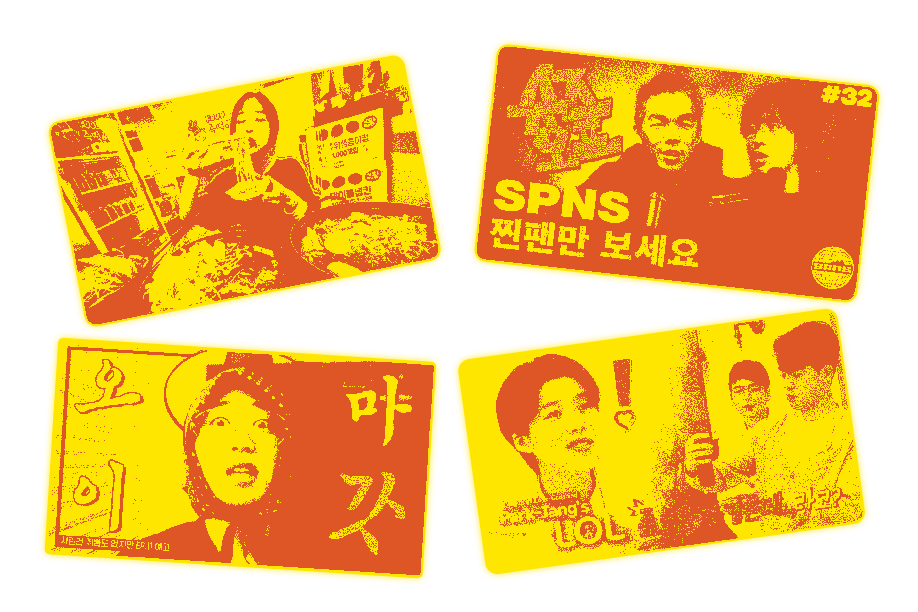
Korean variety shows are immensely popular, featuring celebrities, comedians, singers, and even athletes. They often include interviews, light-hearted games, and opportunities for guests to promote their latest projects or themselves. I’ve always enjoyed watching these shows, both with my family and on my own. Produced and funded by major broadcasting networks, they’re a staple of Korean entertainment and watched by nearly everyone in the country.
Personally, watching Korean people speak naturally in real time (outside the scripted dialogue of dramas) has me develop a stronger grasp of conversational Korean. Compared to my older sisters, I watch far more variety shows and short-form Korean content, which I think has my listening comprehension. While I sometimes still mix up similar-sounding words, I’m generally able to follow conversations quite well. My sisters, on the other hand, have stronger speaking and reading skills, so we balance each other out in that way.
Moreover, through consuming Korean media, I’ve found myself both consciously and unconsciously adopting certain mannerisms and better understanding the hierarchical structures present in Korean culture. For instance, I’ve learned to use both hands when giving something to someone (especially an elder), to wait until the oldest person begins eating before I do, and to use formal phrases when speaking to those older than me. Often, Korean Koreans (as in, people born and raised in Korea) are surprised that I know specific expressions or cultural references. I make a effort to learn, remember, and adapt to these customs so that I don’t unintentionally show disrespect and can continue to bring to my parents. Although my parents never strictly enforced particular ways of speaking or behaving, since they’ve always been understanding of our upbringing, I’ve learnt to develop my own standard. In Korean culture, as in many others, respect and honour toward family and elders hold deep significance. Upholding these values feels to me, both as a personal principle and to avoid any sense of judgment from relatives back in Korea.
Do you feel represented in the media you consume and love the most as well as the media that’s around you every day? How does that representation, or lack of it, make you feel?
I feel that, as a Korean Australian, it may take some time before I see myself fully represented in film. Perhaps, that will change in the future. For now, platforms like TikTok and YouTube have become spaces where I can find creators with similar experiences and other Koreans born and raised outside of Korea that share their stories and lifestyles. It’s within this niche online community that I feel most , even though such representation hasn’t reached mainstream media.
Korean media often feels too “Korean” for me to completely relate to, while Australian media can sometimes feel too “Australian.” I tend to watch more Korean content, partly because many of my friends also enjoy it and it’s what I’m most exposed to. Still, I sometimes wonder whether I would’ve engaged more with Australian media had I grown up in a more white-Australian environment.
Even so, I don’t feel a strong need to immerse myself in Australian content. Australia’s nature allows me to find communities and people with shared interests without feeling pressured to assimilate into one cultural narrative. That said, I often imagine creating a show that reflects the everyday life of a Korean Australian or any second-generation immigrant in Australia, where the story isn’t centred solely on culture or difference. Instead, it would simply portray someone navigating life like anyone else, who just happens to come from an immigrant family. Sometimes, Australian shows with characters of colour focus so heavily on their cultural identity that it ends up highlighting their “otherness.” It would be refreshing to see someone like me or many of my friends, represented as ordinary, complex individuals, not defined only by their background.
Are there any stereotypes about Koreans or Asians in media that you find yourself internalising, questioning, or resisting?
Recently, there has been a noticeable increase in reports of Korean tourists causing trouble in various Southeast Asian countries and earning the unfortunate label of the “Americans of Asia.” These incidents often involve arguments, disrespectful behaviours, or mistreatment of locals. Similarly, when foreigners visit Korea, cases of racism and discrimination sometimes surface.
I can’t ignore the racism that exists within parts of the Korean community, it’s genuinely disheartening and, at times, embarrassing. Considering Korea’s own history of hardship and suffering only about seventy years ago, I would have expected a greater sense of empathy and understanding toward others. Instead, with the global rise of Korean culture, it seems some Koreans have developed a kind of misplaced pride or superiority complex, which can manifest as prejudice or arrogance.
This is one of the few aspects of being Korean that makes me feel conflicted. Of course, not all Koreans behave this way, there are countless stories of foreigners meeting incredibly kind and welcoming locals. Yet the increasing visibility of negative encounters raises uncomfortable questions for me about what it truly means to be Korean, and how I reconcile in my heritage with criticism of its flaws.
What is the one thing that helps you the most when it comes to being proud and accepting of your cultural identity?
I’ve come to accept that I’ll never be 100% Korean or 100% Australian, and I’m with that. A Korean coworker once asked how I identify myself: Korean or Australian? My answer was “Korean Australian.” I’m an Australian citizen with Korean heritage, so it feels to exist within a blend of both cultures—a kind of “” of my own. In Korean, there’s a term for people like me: gyopo (교포), meaning ethnic Koreans living abroad. In the past, this word often carried negative connotations, suggesting disconnection from one’s cultural roots. But I chose to it. I identify myself as a gyopo, someone who can experience the best of both worlds and continuously learn from both cultures.